The Ad That Started a Decade
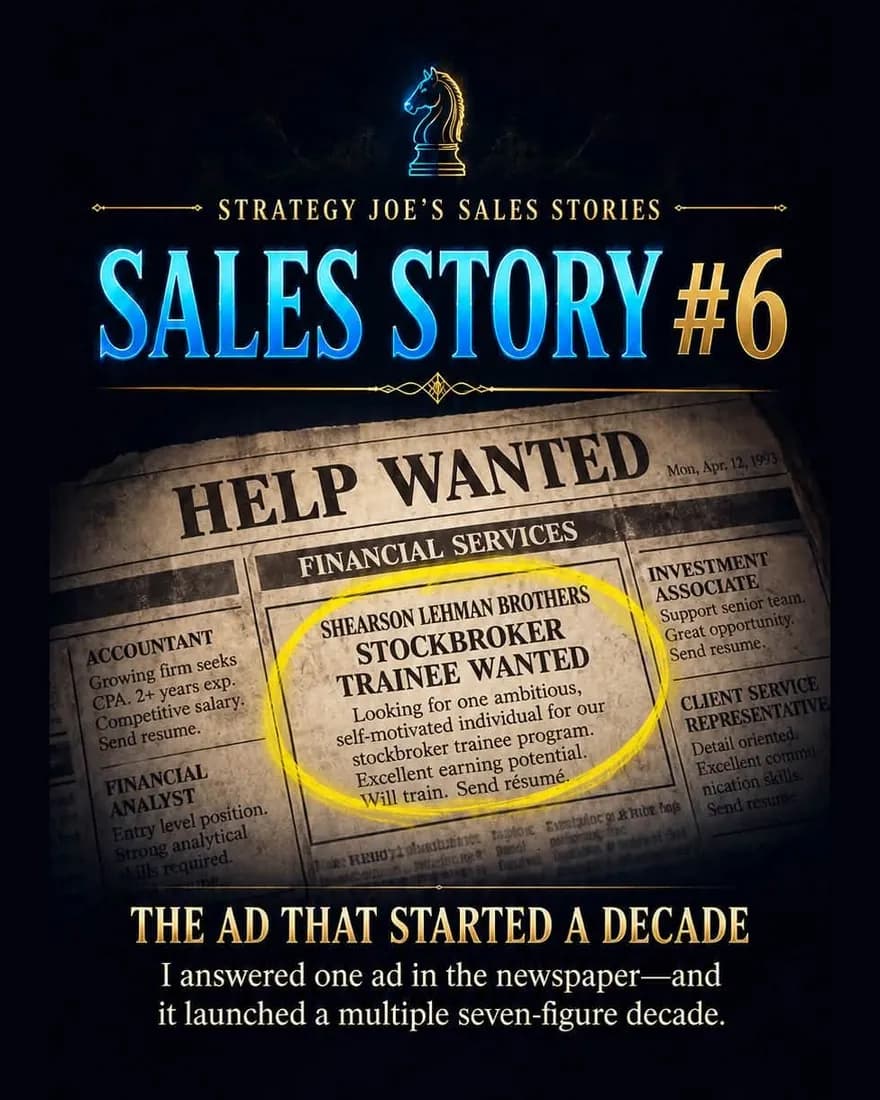
One tiny help-wanted ad from Shearson Lehman, and a multiple seven-figure decade.
 Strategy JoeMaster Sales & Revenue Strategist
In early 1993, my then-wife was pressing me to start a family. I wanted a child too, but we were dealing with fertility issues, and I was worried about the financial responsibility of another mouth to feed.
At the time, I was working in retail sales for a major furniture chain—a story for another day—and had spent months looking for a sales position with greater earning potential.
Then, one Sunday, a tiny advertisement in the Jacksonville newspaper’s help-wanted section caught my attention. Shearson Lehman Brothers was looking for someone with sales experience to enter its stockbroker training program.
I had heard that successful stockbrokers could make serious money, so I answered the ad.
Almost nobody thought I had a realistic chance of being hired.
During my interview, Jacksonville branch manager Charlie Johnston explained that Wall Street’s traditional ideal recruit was around 35 years old, had no previous sales experience and had succeeded as a military officer. The theory was that a disciplined officer would know how to organize a business, manage clients and follow through.
But Shearson Lehman was trying an experiment. The firm wanted to see how experienced salespeople would perform.
My interview lasted about an hour. Charlie told me that if he was interested, I would hear from him within a week.
Nearly two weeks passed before the telephone rang.
I had the job.
I later learned that Charlie had considered 108 candidates and hired only two of us—another salesman named George and me.
For the next four months, my entire job was to sit in an otherwise empty office and study. I had to prepare for the Series 7, Series 6 and Series 63 examinations, renew my insurance licenses and qualify to sell variable annuities.
The Series 7 was the gatekeeper. Score at least 70 percent and the journey continued. Score below 70 and my stockbroker career would end before it began.
My practice scores were inconsistent, so I was nervous when test day arrived.
I scored a 72—just two points above the minimum.
George scored higher, but it did not matter. We had both made it.
The next phase of training offered us a choice: Wall Street in New York or Marina del Rey in California.
I had heard that the fun was in Los Angeles, so California it was.
We stayed for one week in what felt like a James Bond-style bachelor pad, but the training itself was no vacation. Every day, we were required to make 400 cold-call dials using nothing but the White Pages—a thick printed telephone directory filled with the names and landline numbers of local residents.
A team of experts monitored every second of every call and critiqued our performance at the end of the day. Anyone who failed to complete all 400 dials—even once—was eliminated, despite having already passed the Series 7 and invested four months in training.
About 100 newly licensed graduates began the week. By the end, the 400-dial requirement had reduced the group to roughly 65 survivors.
Those 65 were invited to a graduation ceremony at Jimmy’s, a celebrated Beverly Hills restaurant frequented by Hollywood stars, political figures and business leaders.
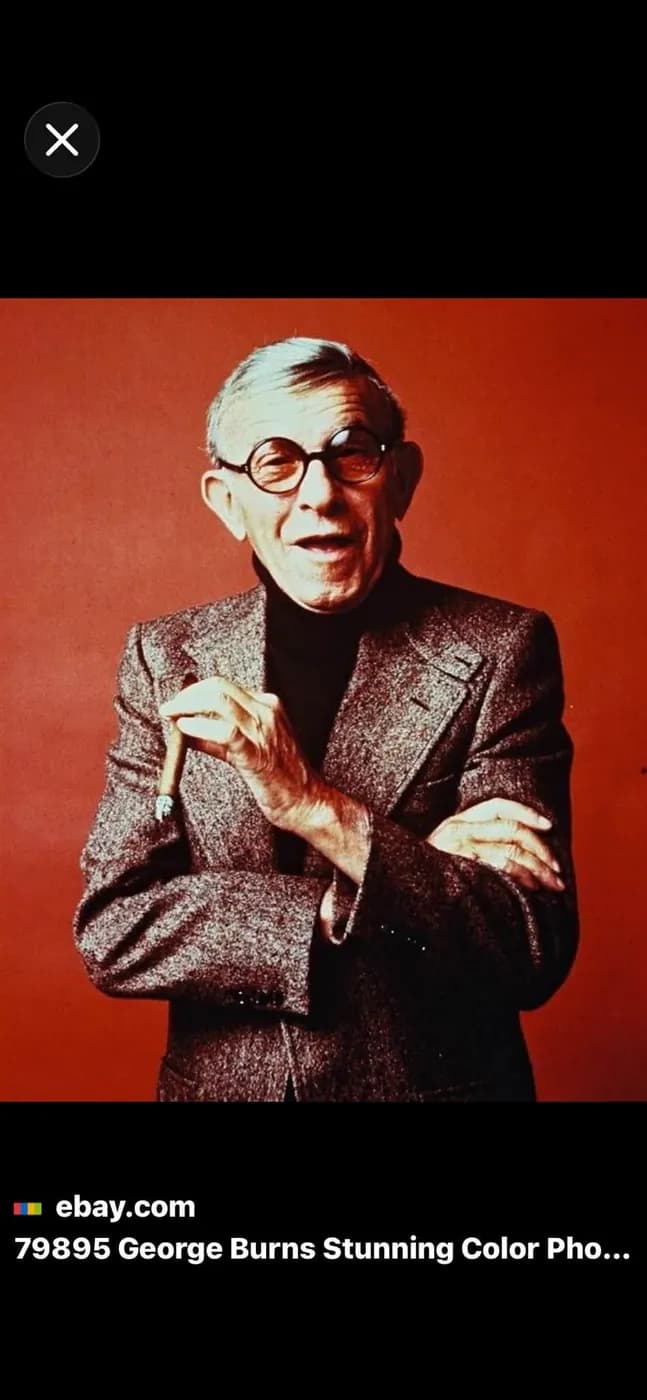
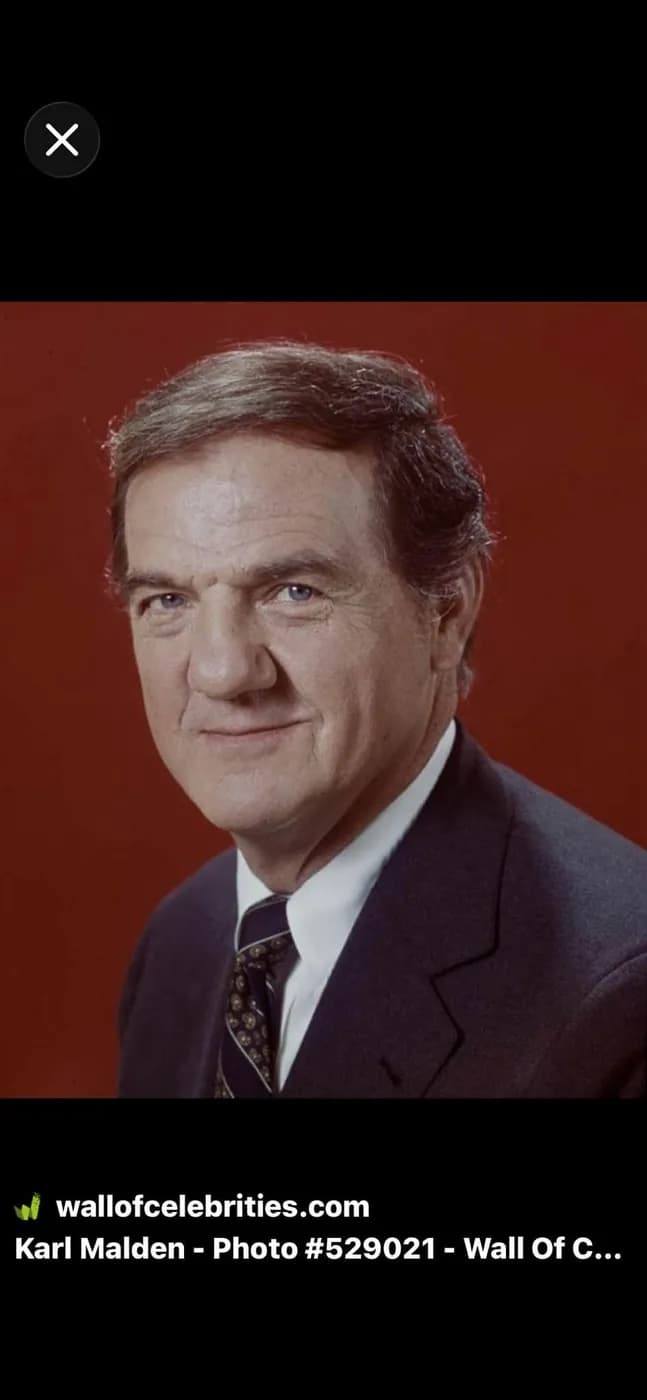
As I walked toward our private dining area, I passed a nearby table and could hardly believe who was sitting there: legendary comedian George Burns; Loretta Swit, best known as Major Margaret “Hot Lips” Houlihan on M*A*S*H; and Karl Malden, star of The Streets of San Francisco.
Now, I realize that all three of these actors were famous before many of the people in my Facebook audience were even born, and I honestly hesitated to use them as references. But the old-timers will recognize their names instantly—and understand why seeing all three together stopped me in my tracks.
Malden was also one of the most recognizable advertising faces of American Express, famous for warning travelers, “Don’t leave home without them.” At the time, Shearson Lehman was part of American Express. There I was, graduating into the brokerage business under the American Express umbrella while one of the company’s most famous representatives sat just a few feet away.
“Life-changing opportunities do not always arrive with fanfare.”
Their presence at Jimmy’s was a complete coincidence. However, one of our managers apparently asked Mr. Malden as a favor if he would address our graduating class.
He graciously agreed.
For about 20 minutes, Karl Malden gave us the traditional pep talk about succeeding in business and in life. It was inspiring—but what happened immediately afterward was far more memorable.

Nature called, so I excused myself and headed to the men’s room. Another graduate stood at about the same time and went there as well.
A few moments later, I was standing at the middle urinal. George Burns was at the urinal to my left, his trademark cigar still in his mouth. The other graduate was on my right.
The graduate kept glancing over at Burns. Movie star or not, I thought all that staring was a little strange.
He finished first and hurried out of the restroom.
Just outside was a telephone mounted against the wall. The graduate deposited a quarter and called someone. As I walked past, I heard him excitedly say—presumably to his wife:
“Honey, honey, you’re not going to believe this. I just peed next to George Burns!”
What the graduate did not realize was that Burns had left the restroom and was walking directly behind me. He heard every word.
“Sonny, sonny, give me the phone,” Burns called out.
The graduate froze. His jaw dropped, his eyes widened and he handed George Burns the receiver.
In that unmistakable George Burns delivery, he said something very close to:
“Honey, why don’t you dump that schmuck of a husband of yours and come down here? You and I can spend the evening together. It’ll be lots of fun.”
I could barely contain my shock and laughter. It was one of those completely unscripted moments that stays with you for the rest of your life.
After graduation, I spent the next six months cultivating many of the new client relationships that had begun during that first week of 400 dials a day. Some follow-up calls were about a new investment idea and asking for the order. Other calls had nothing to do with business; we talked about their families, their hobbies and what was happening in their lives.
At the time, those were called “schmooze calls.” But the purpose was not to manipulate anyone or disguise a sales technique. It was to get to know clients as people and become someone they knew and trusted. Learning how to properly mix business conversations with genuine personal interest over time created stronger consultative relationships and lasting loyalty.
Six months after graduation, I led that entire class—and did so by a wide margin—in all three categories that mattered: assets gathered, gross production and commissions earned.
That performance got me recruited by Dean Witter. In typical 1990s recruiting fashion, they lured me away with a pretty healthy upfront bonus check.
George, meanwhile, also lasted about six months—but then he left the stockbroker business altogether. For him, the job had been a steppingstone to something else.
Years later—long after I had left the firm—I learned just how far Charlie Johnston’s career had taken him.
In 1993, Shearson’s retail brokerage operation was sold and combined with Smith Barney. Charlie remained with the successor organization and continued rising. By 2004, he was President and CEO of Smith Barney, then part of Citigroup—the number-eight company on that year’s Fortune 500. He later became President and Chief Operating Officer of Morgan Stanley Smith Barney, helping oversee approximately $1.7 trillion in client assets.
The manager who took a chance on two salespeople from a field of 108 candidates eventually rose to the top of one of the largest brokerage organizations in the world.
And I was one of the experiments he chose.
That small newspaper ad launched a ten-year career across multiple investment firms, produced a multiple seven-figure decade and gave me one of the funniest celebrity encounters of my life.
But the greatest return was the lesson it taught me.
Have confidence in yourself. Focus on what can go right instead of becoming consumed by everything that could go wrong. Always keep going!!!
At every stage, I faced the possibility of elimination: being chosen from 108 candidates, passing the Series 7, completing 400 cold-call dials every day and surviving the final training program. Any one of those obstacles could have ended the journey. Instead, I kept moving forward—and six months later, I was leading the class by far and being recruited by another major firm.
That lesson stayed with me and continued helping me from that point forward.
Life-changing opportunities do not always arrive with fanfare. Sometimes they are buried among hundreds of ordinary listings in the help-wanted section of a Sunday newspaper.
But the opportunity means nothing unless you notice it—and answer the ad.